RIPRESE DI SATURNO AD ALTA RISOLUZIONE CON IL CAT MOSTRANO LA STRUTTURA DECAGONALE DEL POLO SUD
 Il 6 settembre 2026, qualche ora dopo la conclusione dell’evento sulla materia oscura, svoltosi con la presentazione di Francesco Capomassi, i ricercatori Giovanni Isopi e Aldo Zapparata hanno puntato il telescopio CAT verso il pianeta Saturno, attualmente in lento avvicinamento alla Terra, in attesa della sua opposizione prevista il 4 ottobre.
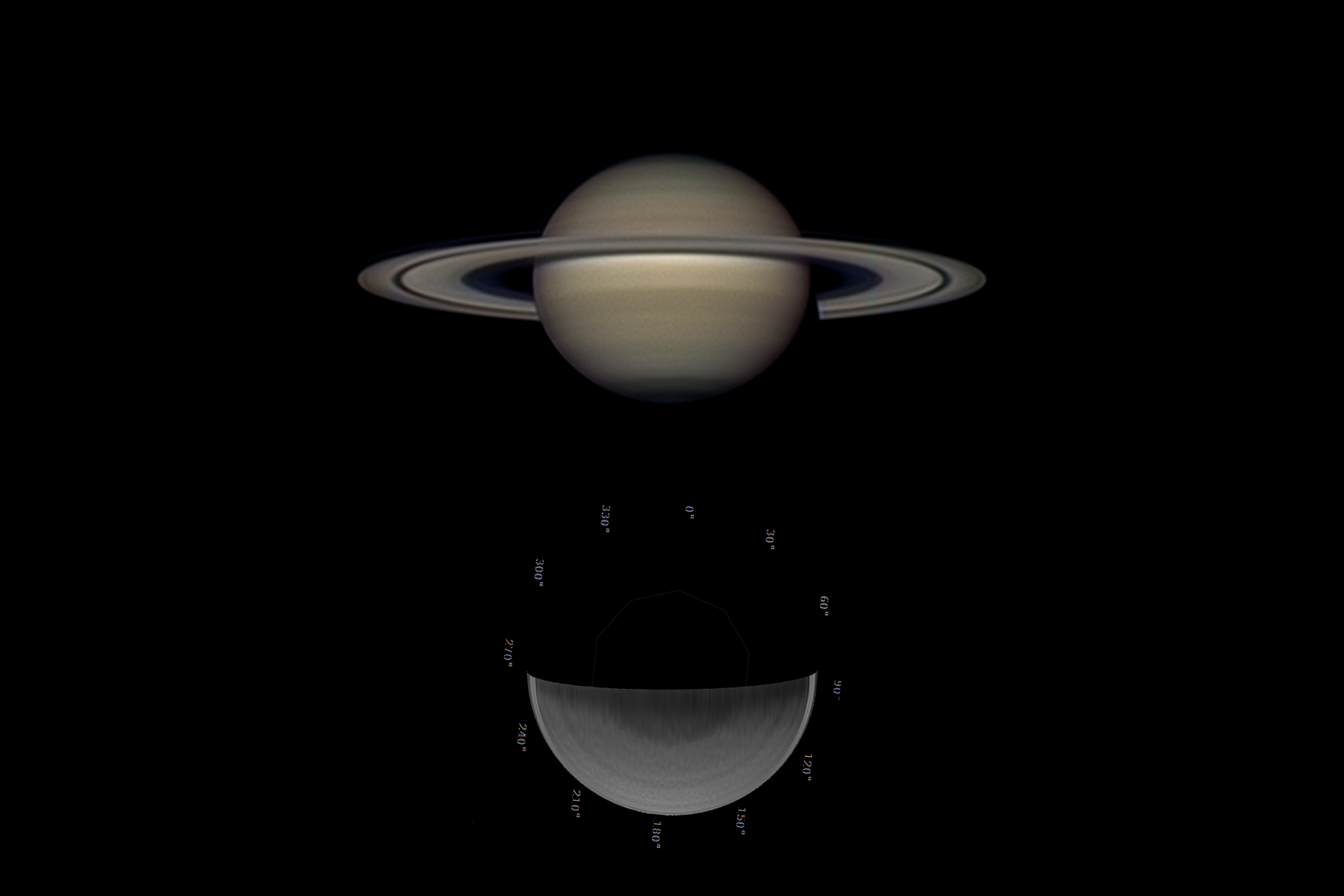 Dopo aver visto gli anelli sostanzialmente di taglio per gli ultimi due anni, Saturno comincia ora a mostrare verso la Terra il suo polo sud, che è rimasto al buio per gli ultimi 15 anni.
Con sorpresa degli scienziati, se al polo nord esiste una tempesta di forma esagonale, al polo sud è stata osservata una simile ma di forma decagonale. La risoluzione raggiunta con il CAT (un MEADE da 41 cm ACF) ha permesso ai ricercatori di osservare, seppur debolmente, questa struttura atmosferica.
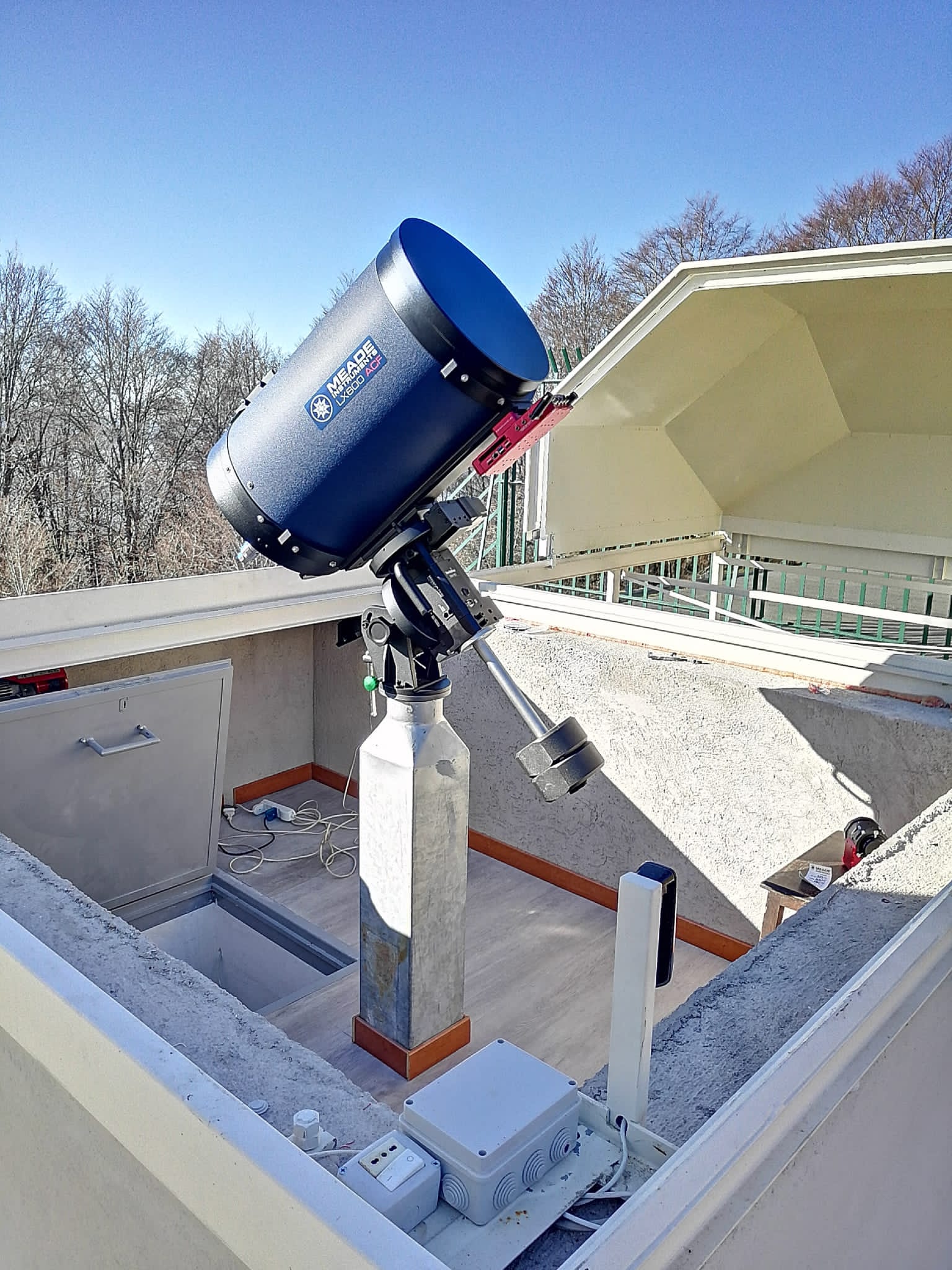 Nel corso dei prossimi mesi, con il pianeta più vicino alla Terra, saranno tentate osservazioni più precise.
Le immagini presentate sono il risultato della derotazione di circa 20 minuti di video acquisiti con filtri R, G, B e infrarosso, utilizzando una camera ASI 462 monocromatica con ruota portafiltri.
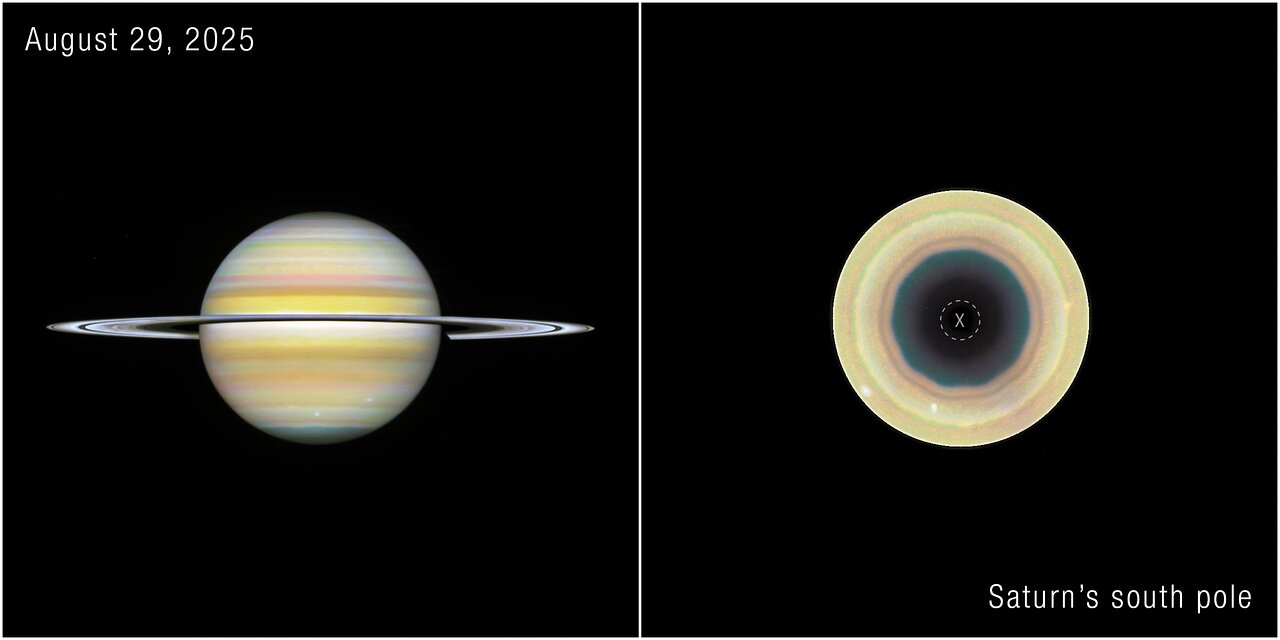
Two views of Saturn from the NASA/ESA Hubble Space Telescope reveal a giant, evolving 10-sided atmospheric wave encircling the planet’s south pole. The feature, called a decagon, is the first large, regular-sided pattern observed at Saturn’s southern hemisphere. By comparing observations taken over several years, researchers found that the pattern has become increasingly distinct since 2023, suggesting they may be witnessing a new atmospheric phenomenon develop on the gas giant. The observations were made as part of Hubble’s Outer Planet Atmosphere’s Legacy (OPAL) program, which has monitored Jupiter, Saturn, Uranus, and Neptune for more than a decade. The “X” and dashed circle in the image on the right represent where data was not captured by Hubble. [Image description: Side-by-side comparison of two views of the gas giant Saturn, labeled “August 29, 2025” at the top left corner. At left is a straight-on view of Saturn, a globe with pale yellow horizontal bands at the equator and orange and pink at the mid-latitudes. Some bands towards the north and south pole have a light blue hue. There are prominent horizontal rings circling at the equator. At right, labeled “Saturn’s south pole,” the south-polar view of Saturn shows concentric bands in its atmosphere, mostly tan and orange, surrounding a dark central region that has a 10-sided outline. A small, dashed circle at the very center of the pole with an “X” inside denotes missing data.]
Seguici su Facebook, Twittere Google+ o iscriviti alla mailing list: aocclist@campocatinobservatory.orgper rimanere aggiornato su tutto ciò che riguarda l’Osservatorio Astronomico di CampoCatino.